
Key Takeaways
- House and condo purchases differ significantly in cost, ownership, upkeep, and lifestyle fit.
- Recognizing financial risks and market variability is crucial when choosing between property types.
If you’re weighing a house versus a condo, understanding recent trends, financial considerations, and lifestyle impacts can help you decide with more confidence. This guide explores how houses and condos compare, including shifting buyer preferences, ownership types, and the financial factors you need to keep in mind.
What Is a House Purchase?
Single-family home basics
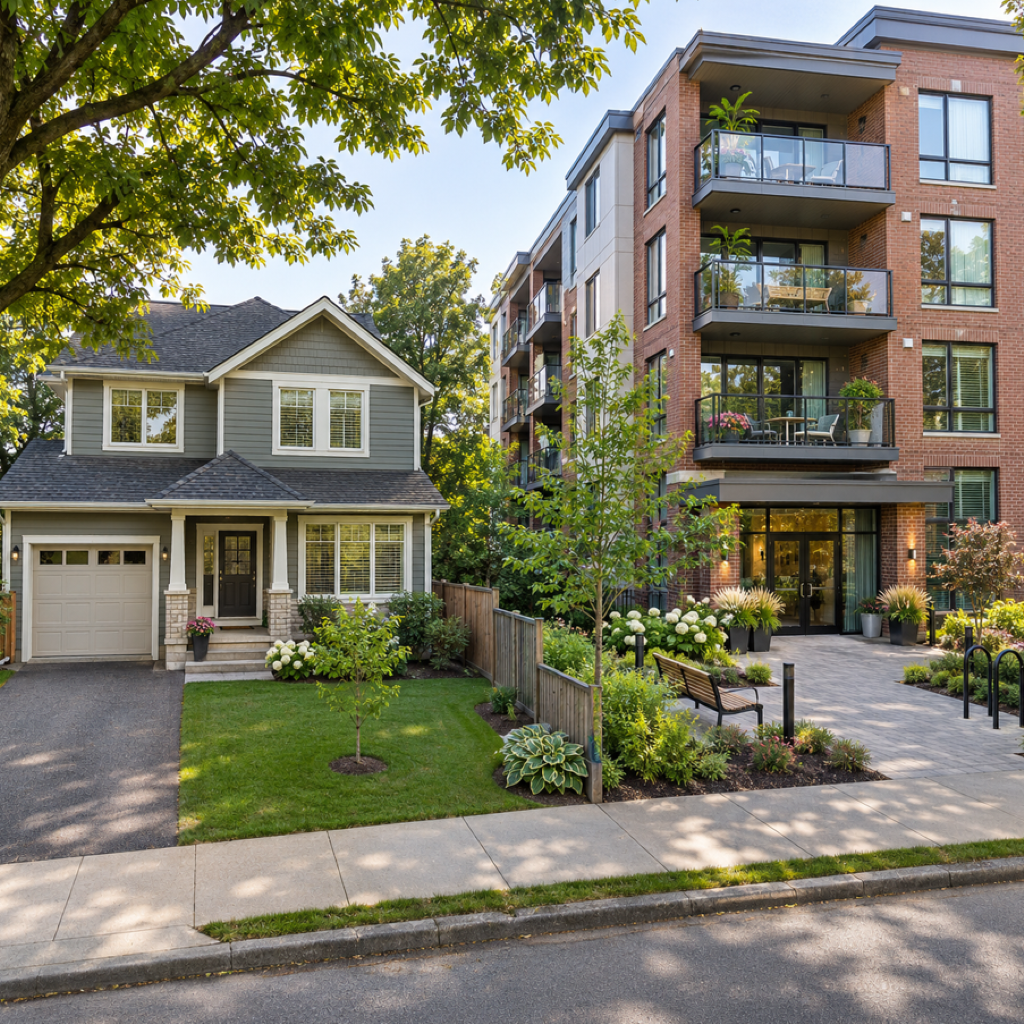
A house purchase generally refers to buying a detached single-family home. These properties typically sit on a distinct plot of land and grant you exclusive use of both the structure and the surrounding yard. You’re responsible for all changes, maintenance, and improvements inside and outside the property. This independence makes houses popular with buyers who want space, privacy, and the flexibility to customize their living environment.
Common ownership structures
When you buy a house, you usually own both the building and the land it’s on outright, often called “fee simple” ownership. This is the most common form for single-family homes. As the owner, you have significant control but are also responsible for taxes, utilities, insurance, and upkeep. Some neighborhoods, especially planned communities, may have homeowners associations (HOAs) that set rules or collect dues for shared amenities, but you still own the home directly.
What Is a Condo Purchase?
Condo types and definitions
A condo purchase is fundamentally different from buying a house. “Condo” is short for “condominium,” a structure divided into individual units, each owned separately. Common condo types include high-rise units in cities, townhouses in suburban areas, and even some detached homes built as condos. Condo living can range from compact studios to spacious, multi-room dwellings.
Understanding shared ownership
When you buy a condo, you own the inside of your unit while sharing ownership of hallways, grounds, roofs, and amenities with other residents in the association. The homeowners association, or HOA, oversees upkeep and repairs for shared spaces, funded by monthly or quarterly fees from all unit owners. You have less exterior responsibility but must follow association rules and contribute to collective decisions.
How Do House and Condo Trends Differ?
Recent buyer preferences
In recent years, buyer preferences between houses and condos have shifted with market conditions, job locations, and lifestyle changes. Many buyers seeking space, privacy, and outdoor areas gravitate toward single-family houses, especially in suburban areas. Condos attract interest for their lower maintenance needs, access to shared amenities, and typically lower price points in urban centers. Factors like remote work opportunities and evolving family needs continue to shape demand for different property types.
Emerging urban and suburban patterns
Urban areas often report robust demand for condos, where land is limited and vertical living accommodates more residents. Suburban and exurban regions have seen growth in house purchases, especially among buyers seeking more space or outdoor access. Fluctuations in interest rates, supply, and home prices can shift demand quickly, so staying informed about local trends matters as you consider your options.
What Are the Main Financial Differences?
Typical price ranges
Houses usually cost more than condos, reflecting not just the living space but also the land. Because condos typically share land and structural elements, their initial purchase price is generally lower. However, prices can range widely based on location, age, amenities, and square footage for both types.
Monthly cost comparisons
While a house may require a larger mortgage, you control your ongoing expenses—there’s no mandatory association fee unless you join a neighborhood HOA. For condos, monthly HOA dues are standard and can cover maintenance, security, landscaping, pools, or other shared features. These fees add to your total monthly housing cost, but may reduce the need to budget for certain repairs or exterior projects.
Common fees and assessments
With houses, costs include property taxes, insurance, utilities, and the maintenance work you choose. For condos, HOA fees cover some of these expenses—but you might face occasional assessments for major building repairs or improvements. Review association budgets and reserve studies, as unexpected costs can arise if shared elements need significant work.
Pros and Cons of Each Option
House ownership advantages
Owning a house gives you the freedom to personalize, expand, or landscape your environment. You’ll often enjoy more privacy, outdoor space, and fewer restrictions regarding pets or long-term guests. Buyers who want to tailor their living space and take on independent maintenance value this autonomy.
Condo living benefits
Condos offer convenience; the HOA handles many exterior tasks, saving you time and effort. Shared amenities such as gyms, pools, or security may be included. For buyers who prefer a lock-and-leave lifestyle, especially those who travel often or live in busy cities, condos are often an appealing choice.
Potential drawbacks to consider
Houses generally require more maintenance, planning, and responsibility, which may not suit every lifestyle. Condo owners trade off some independence—the HOA sets community rules and may limit renovations, pet ownership, or short-term leasing. Both property types carry risks if major repairs or community issues arise.
Which Property Type Might Suit You?
Lifestyle and space needs
If you prioritize privacy, yard space, and the ability to modify your property, a house may be the better fit. Families or those planning to expand might benefit from the flexibility. If you prefer less maintenance and easier access to shared amenities or urban conveniences, a condo could meet your needs.
Maintenance considerations
Consider how much time and interest you have in property upkeep. Houses give you full responsibility, while condos reduce your direct burden—though you’ll pay for shared maintenance through regular dues.
Resale and long-term value factors
The resale value of houses and condos depends on local market conditions, property age, and desirability. Houses may appreciate more reliably in certain markets, but well-located condos can also perform well. Researching historical appreciation and local demand will help set expectations for your investment.
Are There Any Financial Risks?
Understanding market variability
All real estate involves some level of risk. Prices can rise or fall based on changes in jobs, mortgage rates, and neighborhood popularity. Both houses and condos can be affected by shifts in supply or regional development projects. Reviewing recent sales and long-term trends can help you understand what to expect.
Planning for unexpected expenses
Budgeting for your home or condo should include potential for unplanned repairs, assessments, or drops in value. Condominium owners may face special assessments for issues in the building or grounds, while homeowners may face major repair costs or property tax increases. Maintaining a contingency fund can help manage these financial uncertainties.