
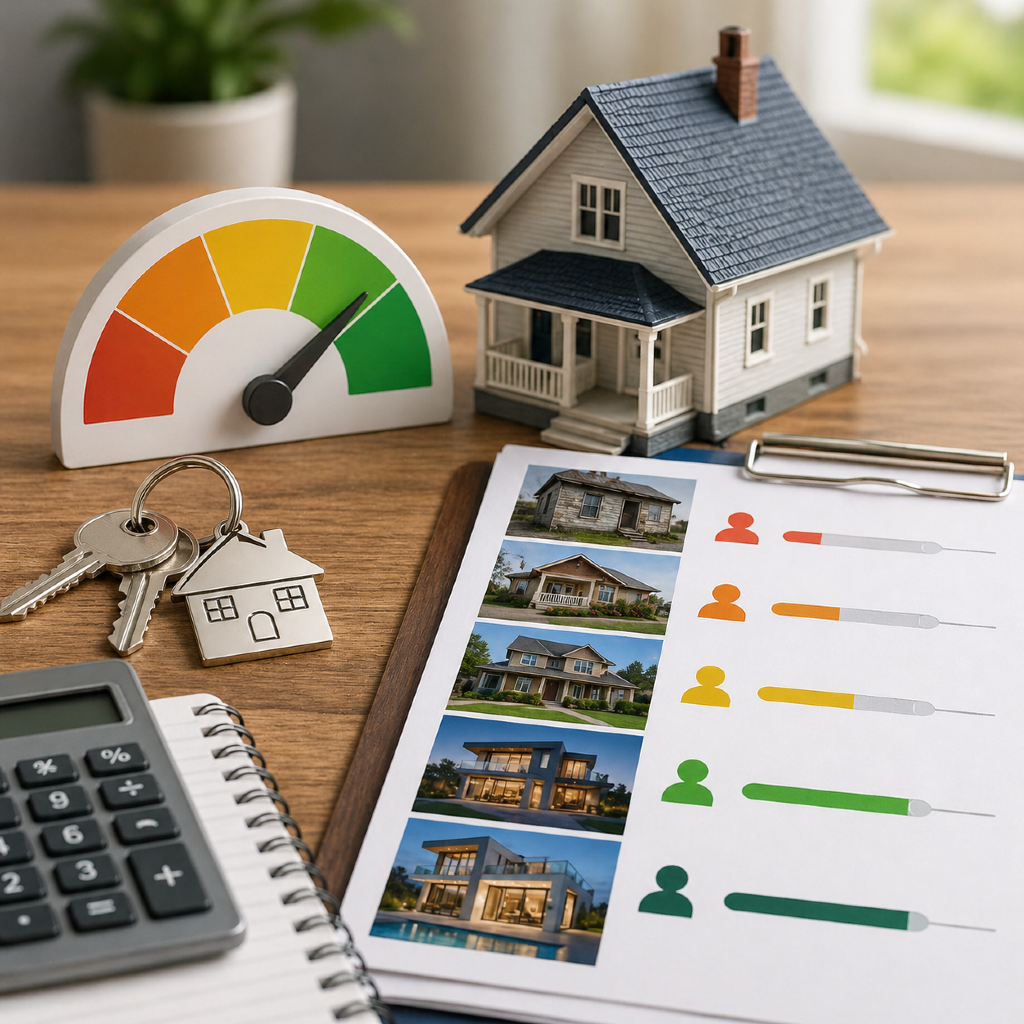
Key Takeaways
- Credit scores play a major role in mortgage approval and loan terms, affecting your home buying journey.
- Preparation and understanding your credit profile help you navigate challenges, even with fair or limited credit.
Did you know that the average credit score for homebuyers often falls between 670 and 740? So, where do you stand and what does your score mean for your mortgage options? This guide explores the essentials of credit scores and home-buying, using real-world scenarios to illustrate your possible path to homeownership.
What Is a Credit Score?
Basic components explained
A credit score is a three-digit number that gives lenders a glance at your financial trustworthiness. Common scoring models, like FICO or VantageScore, use information from your credit report, including payment history, credit usage, length of credit history, new credit inquiries, and types of accounts.
How credit scores are calculated
Each factor weighs differently: payment history often carries the most influence, followed by amounts owed. Length of credit history, types of accounts (credit mix), and new credit make up the rest. Scores typically range from 300 to 850—the higher your score, the more favorably lenders view you.
How Does Credit Score Impact Home Buying?
Why credit matters for mortgages
Your credit score impacts a lender’s willingness to approve your mortgage application and the type of loan you can access. It’s a snapshot of your financial habits, helping lenders predict whether you’ll make future payments on time.
Potential influence on loan terms
A higher credit score usually leads to more attractive loan terms—such as lower interest rates and broader access to mortgage types. Lower scores may mean higher costs or more stringent requirements, like a higher down payment or additional documentation.
What Credit Score Do Lenders Look For?
Typical score ranges by loan type
Lenders’ requirements vary by loan product:
- Conventional loans: Often, a score of 620 or higher is expected.
- FHA loans: These may accept scores as low as 580 (or sometimes lower with larger down payments).
- VA and USDA loans: Typically flexible, but many lenders prefer at least 620.
Keep in mind that these ranges can vary, and other financial factors always play a part.
Factors lenders may consider
Along with your score, lenders evaluate your income, employment history, debts, and the size of your down payment. These factors together give a clearer picture of your ability to manage monthly payments and overall loan risk.
Case Study: Buying With Excellent Credit
Profile of a high-credit borrower
Imagine a borrower with a FICO score of 750. This person has a long, consistent history of paying bills on time, low credit card balances, and a stable income. Their credit report shows diversified accounts and no recent dings.
Potential benefits in the process
With excellent credit, this buyer qualifies for a wider array of mortgage products. Lenders may offer more favorable rates, potentially saving thousands of dollars in interest over time. The process may move more smoothly, and the buyer often needs to provide less additional information to the lender.
Case Study: Qualifying With Fair Credit
Steps taken to secure a mortgage
Now, picture a buyer with a credit score around 640. This person has had some late payments or higher credit utilization but generally manages finances responsibly. They start by gathering documentation, clarifying their income, and working with the lender to explain any past credit missteps.
Challenges and possible solutions
This buyer may experience higher interest rates or be asked for a larger down payment. To improve their chances, they could pay down debts before applying, consider FHA loans, or provide supporting documentation about their financial recovery. In many cases, patience and preparation can help overcome mid-range credit challenges.
Case Study: Overcoming Low Credit Challenges
Strategies for lower credit applicants
For buyers with scores below 600, securing a mortgage is more challenging but not impossible. Building up savings, making a substantial down payment, and showing recent improvements in financial habits can demonstrate reliability to lenders.
Role of down payments and compensating factors
A larger down payment may offset a low credit score, signaling to lenders your investment in the property and reducing their risk. Additional compensating factors—like a stable job, supporting reserves, or a co-borrower—can help strengthen your application.
Can You Buy a Home With No Credit History?
Exploring alternative qualification methods
If you have little or no traditional credit history, some lenders will consider alternative data. This might include reviewing payment records for rent, utilities, or other regular obligations.
What lenders may require
Be prepared for extra documentation, like bank statements, proof of consistent savings, or letters from landlords or service providers. Lenders may be more cautious but will look for evidence you can manage monthly mortgage payments responsibly.
How Can You Improve Your Credit Score?
Actionable tips for buyers
Improving your credit is possible with a plan:
- Pay all bills on time, every time; even small late payments can lower your score.
- Pay down debts, especially credit card balances, to reduce your credit utilization percentage.
- Check your credit reports for errors and dispute any inaccuracies.
- Limit new credit inquiries prior to your application.
Common pitfalls to avoid
Avoid maxing out cards, taking on new debts shortly before applying for a mortgage, or closing longstanding accounts, which may shorten your credit history. Steady, consistent habits are key to building and maintaining a healthy credit score.