Key Takeaways
- Buying a foreclosure involves unique risks, careful evaluation, and a detailed step-by-step approach.
- Understanding current trends and due diligence can help you make an informed home-buying decision.
Thinking about buying a foreclosure? Whether you’re a first-time buyer or a seasoned homeowner, understanding how foreclosure sales work is essential to protect your investment and make the process smoother. This guide breaks down what a foreclosure home is, trends shaping today’s market, the risks involved, and a practical, step-by-step approach.
What Is a Foreclosure Home?
If a homeowner is unable to meet their mortgage payments, their lender may repossess the property through a legal process known as foreclosure. These homes are then resold—often through auctions or directly by the lender—to recover the remaining loan balance.
How Foreclosures Happen
Foreclosures typically start after several missed mortgage payments. The lender initiates legal proceedings to claim ownership. Once the foreclosure is finalized, the property often becomes available for sale to new buyers, either at public auctions or as part of a bank’s real estate inventory (often called “real estate owned” or REO properties).
Types of Foreclosure Sales
You might encounter two main types:
- Auction Sales: Properties are sold at public auctions to the highest bidder. These sales may offer opportunities for a better price but often require cash payment and provide little or no chance to inspect the property first.
- Bank-Owned (REO) Sales: If a property doesn’t sell at auction, it may become bank-owned. These homes are typically listed similarly to traditional real estate sales, giving buyers more time for due diligence and often a chance to inspect before purchase.
What Trends Affect Foreclosures?
Understanding market conditions can help you decide if buying a foreclosure fits your budget, timeline, and risk tolerance.
Market Shifts and Inventory
The availability and pricing of foreclosure homes ebb and flow with the broader housing market. Times of economic stress, rising interest rates, or job market contraction can increase foreclosures, while strong housing demand may limit inventory. Recent trends may see lower inventories in growing markets, whereas some regions experiencing job loss or affordability pressures might have more options.
Regional Differences
Foreclosure rates, inventory, and sale procedures can differ significantly between states and cities. States with judicial foreclosure processes may have slower but more predictable sales, while nonjudicial states often move faster. Always research the local market to set appropriate expectations for timing and availability.
What Are the Main Risks?
Buying a foreclosure is not without pitfalls. Knowing the common risks can help you build safeguards into your approach.
Property Condition Factors
Foreclosed homes are often sold “as is.” Previous owners may have deferred maintenance or removed appliances and fixtures. Water damage, outdated systems, or structural issues aren’t uncommon. Routine home inspections are even more important here, though access for inspections can be limited, especially at auction.
Potential Legal Complications
Title issues, unpaid taxes, or outstanding liens may remain with the property post-sale. Some homes could be occupied, creating further challenges during the transfer of ownership. Engaging a real estate attorney or experienced agent (where allowed) can help you spot and address these issues.
How Does the Buying Process Work?
The process of buying a foreclosure differs from traditional home buying, chiefly in terms of speed, requirements, and access.
Auction Versus Traditional Sale
- Auction: You’ll often need to pay cash or have immediate financing, and bids typically require earnest money deposits upfront. This route offers less time for inspections and due diligence before committing.
- Traditional (REO) Sale: The process more closely mirrors a standard home purchase. You can use traditional financing, often negotiate with the selling bank, and usually have access to the property for inspections.
Typical Timeline
Auction closings are generally swift—sometimes in days or weeks. REO sales may stretch over several weeks as banks process offers, conduct internal reviews, and clear any outstanding legal encumbrances. Delays may arise, so patience and preparation are essential.
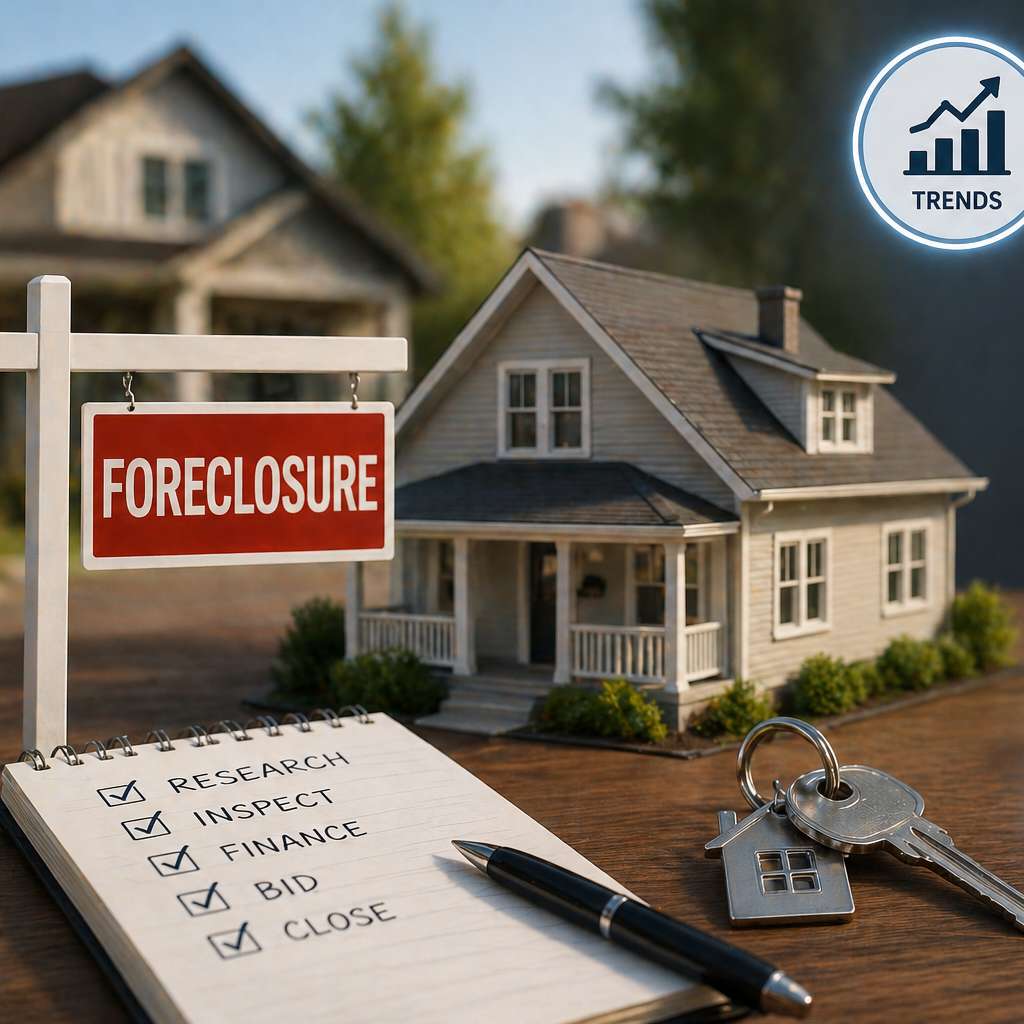
Step-by-Step: Buying a Foreclosure Home
Success in purchasing a foreclosure requires planning and careful execution. Here’s a clear step-by-step roadmap:
Step 1: Assess Your Budget
Determine what you can comfortably afford, factoring in extra funds for possible repairs, legal fees, title insurance, and unforeseen issues unique to foreclosures.
Step 2: Get Prequalified
Secure prequalification for financing if you aren’t a cash buyer. This demonstrates to sellers—and yourself—that you’re ready to move quickly and confidently.
Step 3: Research Available Listings
Look for foreclosures listed on real estate websites, through public records, or at local auctions. Banks, government agencies, and some specialized brokerages may also list REO properties.
Step 4: Evaluate the Property
Visit the property if allowed. Schedule an inspection if possible, and investigate local comparable sales to estimate value and project potential costs for repairs and upgrades.
Step 5: Make an Offer
For auctions, you’ll participate in live or online bidding. For REO sales, you’ll submit a written offer, often using standardized forms. Be sure to follow any required terms—such as earnest money, proof of funds, or preapproval letters.
Step 6: Monitor Due Diligence
Review the property’s title, check for liens, and confirm the status of taxes and utilities. Some issues can only be discovered after your offer is accepted, so move quickly and seek professional help if needed.
Step 7: Prepare to Close
Finalize your financing or arrange your cash payment. Review closing costs, complete final paperwork, and coordinate the transfer of occupancy. Allow some flexibility for unexpected delays.
What Should Buyers Watch For?
Knowing where surprises often arise can help you budget and prepare.
Hidden Costs to Consider
Beyond standard closing costs, factor in needed repairs, upgrades, and professional services such as inspections, title searches, and legal reviews. Properties left vacant may have damage that isn’t visible at first glance.
Home Inspection Importance
Even if a full inspection isn’t possible before purchase, try to complete one as soon as possible afterward. Uncovering needed repairs early can help you prioritize what’s most urgent and renegotiate if the sale terms allow.
Is Buying a Foreclosure Right for You?
Buying a foreclosure requires a willingness to manage extra risk and complexity.
Assessing Your Risk Tolerance
Ask yourself how comfortable you are with uncertainty, short timelines, and potential repairs. If you value speed and potential savings but can handle surprises, a foreclosure might suit you.
Alternatives to Foreclosures
If the risks feel too great, consider options like traditional listings, short sales, or homes in need of minor repairs. Each path comes with its own set of trade-offs—balancing cost, convenience, and risk.