Key Takeaways
- Understanding each step of the home buying process helps you navigate buying a home with more confidence.
- Comparing buying versus renting highlights both financial and lifestyle considerations for making the best choice for your situation.
Many people are surprised to learn that the home-buying process can involve dozens of steps and multiple decision points—understanding the basics can help you approach it with confidence. Whether you’re buying for the first time or considering a change from renting, a clear roadmap can help you make informed decisions at every stage.
What Does Home Buying Involve?
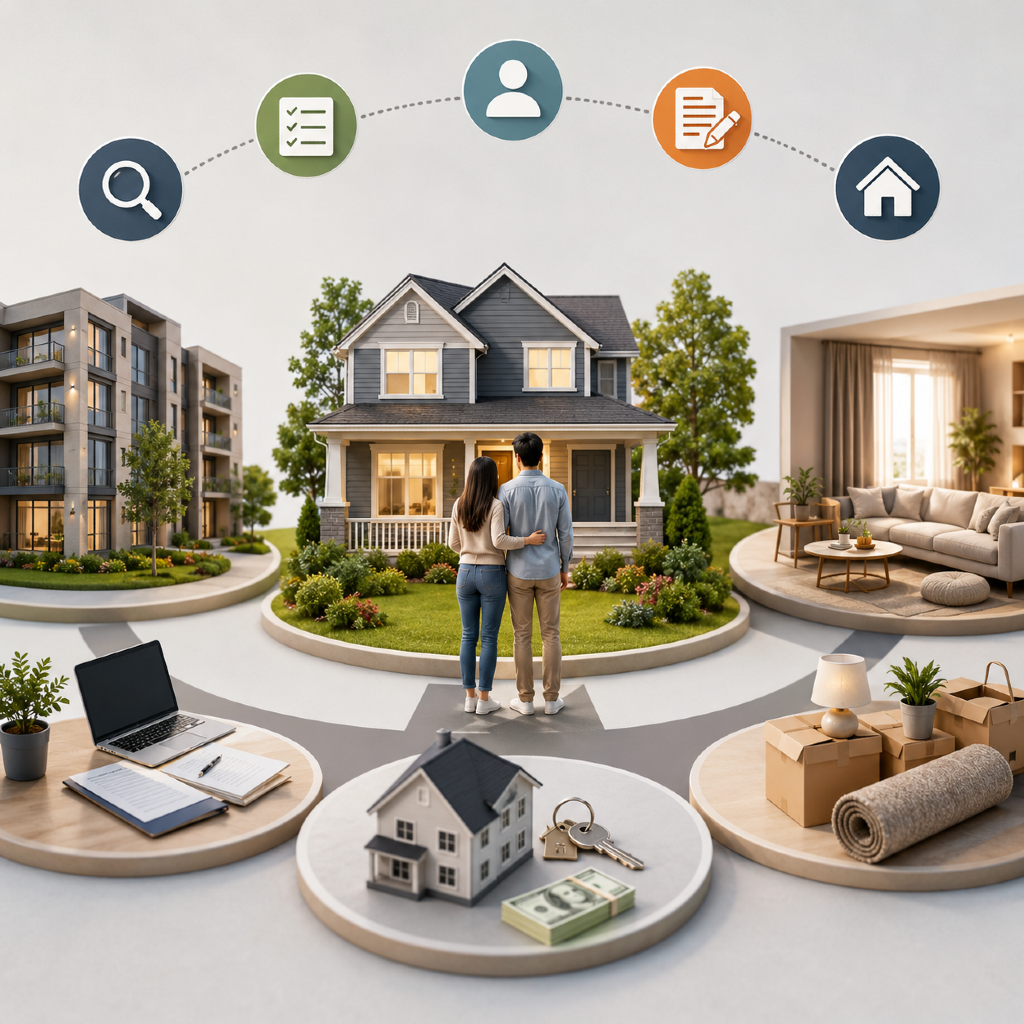
Typical sequence of buying a home
The home buying process is generally organized into a series of stages. You’ll typically start by exploring your finances and determining what you can afford. After that, you find a real estate agent, search for available properties, and decide which ones meet your needs. Once you identify a property, you’ll make an offer and, if accepted, proceed through inspections, appraisals, and various paperwork before completing the closing process and taking ownership.
Parties involved in a home purchase
A home purchase usually involves several different parties, each playing a specific role. As the buyer, you are at the center of the process. In most transactions, you’ll also work with a real estate agent, mortgage lender, home inspector, appraiser, and possibly attorneys or escrow agents, depending on local practices. Sellers, their agents, and sometimes title companies are also involved, each contributing toward a successful and legal transfer of the property.
How Do You Start the Home Buying Process?
Assess your finances
The first step is to have a clear understanding of your financial situation. This means reviewing your income, outstanding debts, and overall credit profile. Calculate how much you can comfortably allocate toward a monthly mortgage payment, taking into account other housing costs such as taxes, insurance, and maintenance. Understanding your budget upfront puts you in a stronger position when you start viewing homes and applying for loans.
Explore neighborhood options
Once you have a sense of your budget, it’s time to explore neighborhoods that match your lifestyle and priorities. Research local amenities, schools, commute times, and property values. Visiting neighborhoods in person or using reliable online tools can help you narrow choices and find areas that align with your needs.
What Are the Steps to Buy a Home?
Getting pre-approved for a loan
Before you start house hunting in earnest, consider getting pre-approved for a mortgage. Pre-approval involves a lender reviewing your credit and finances to determine how much they might be willing to lend you. This not only clarifies your price range but also shows sellers you are a serious and qualified buyer.
Finding and touring properties
With pre-approval in hand and desired neighborhoods identified, you can start searching for homes. Your real estate agent can help you find properties that meet your criteria, schedule showings, and provide guidance on market trends. Touring homes in person lets you assess size, condition, and whether a property feels right for you.
Making an offer
When you’ve found a home that fits, your agent can guide you in making an offer. The offer includes the purchase price and any conditions, such as contingencies for inspection or appraisal. The seller can accept, reject, or negotiate the terms. Once both parties agree, the property moves into the next phase: due diligence.
Home inspection and appraisal
During this period, you will typically order an inspection to check the home’s condition and identify any issues. Your lender will also require an independent appraisal to ensure the property’s value is in line with the purchase price. These steps provide both information and some protection before you commit to the final purchase.
Finalizing paperwork and closing
If the inspection and appraisal are satisfactory, the process moves forward to finalizing loan documents and legal paperwork. You’ll review all agreements, sign documents, and pay any closing costs due. Once everything is complete, you receive the keys and officially become the homeowner.
How Do Mortgage Loans Work?
Types of home loans
Mortgage loans come in several forms, with fixed-rate and adjustable-rate being the most common. Fixed-rate loans offer consistent payments over the life of the loan. Adjustable-rate loans may start with a lower interest rate that can change periodically. Other options—such as government-backed loans—may be available for eligible buyers.
Typical loan requirements
Most lenders look for a stable income, responsible credit history, and a reasonable debt-to-income ratio. Borrowers may also need to provide detailed financial documentation, including tax returns, pay stubs, and bank statements. Specific requirements can vary depending on the loan program and lender policies.
Understanding down payments
A down payment is the portion of the home price you pay upfront. Minimum down payments can differ by loan type but often range from 3% to 20% of the purchase price. While a larger down payment can reduce your monthly payment and the need for certain insurance, options exist for buyers with less available cash.
Buying vs. Renting: What’s the Difference?
Key differences in process and responsibility
When you buy a home, you take responsibility for the property, including maintenance, insurance, taxes, and any repairs. Renting, in contrast, often means fewer upfront costs and less ongoing obligation for repairs—these typically fall to the landlord. Buying involves a longer and more detailed process, while renting usually only requires an application, deposit, and lease agreement.
Financial implications of buying versus renting
Buying a home allows you to build equity as you pay down your mortgage, which can be a financial benefit over time. However, there are additional costs to consider—including maintenance and possible changes in property value. Renting provides flexibility and may involve fewer financial risks, but does not contribute to long-term ownership or equity-building.
What Are the Pros and Cons of Buying?
Building equity and long-term benefits
Homeownership can offer you the opportunity to build equity, potentially benefit from property appreciation, and customize your living space. Over time, owning a home can serve as a way to build personal wealth and increase your stability.
Potential challenges and risks
However, owning a home comes with responsibilities and risks. These can include unpredictable maintenance costs, market fluctuations affecting your investment, and the possibility of needing to relocate before you’ve built significant equity. It’s important to weigh both the advantages and challenges in the context of your personal circumstances.
Is Homeownership Right for You?
Evaluating your financial readiness
Before buying, ask yourself if your finances are stable enough for the down payment, monthly mortgage, and additional costs like insurance and repairs. Consider whether you have an emergency fund for unexpected events.
Considering lifestyle and future plans
Think about your long-term plans. Will you want to stay in one area for several years? Are you ready for the responsibilities that come with homeownership, such as maintenance and yard work? Answering these questions can help you decide if buying now is the right choice for you.