Key Takeaways
- Understanding the pros, cons, and processes for new construction and resale homes empowers you to make informed decisions.
- Assessing your needs, budget, and market conditions is essential before starting your home-buying journey.
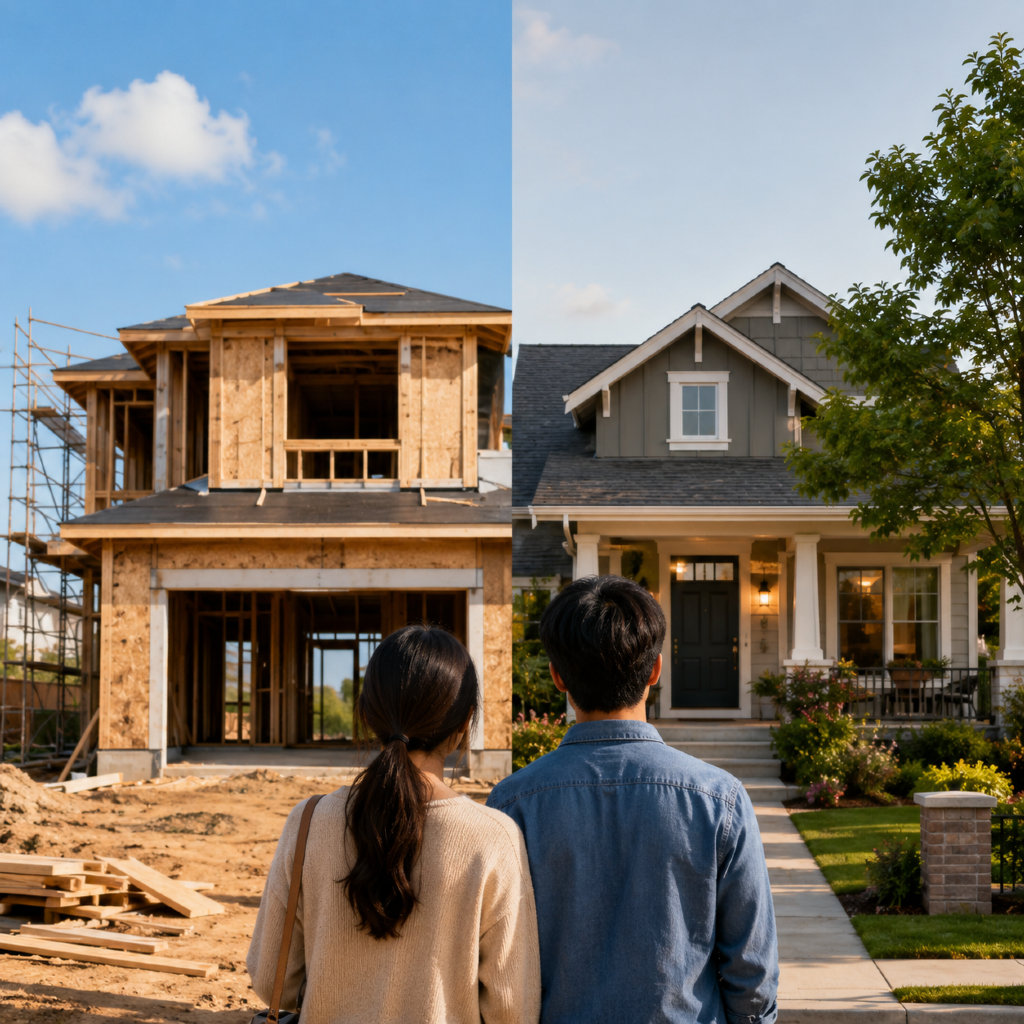
When looking for a new place to call home, you’ll be faced with a key question: should you buy a brand-new construction home, or choose a resale property that’s already been lived in? Each option has unique benefits, considerations, and steps to follow. This guide will help you weigh your options so you can move forward with confidence.
What Are New Construction Homes?
Definition and features
New construction homes are properties built from the ground up and have not yet been occupied. You’ll often see these advertised as “new construction homes near me.” They are typically part of developments by builders or in newly established communities. As the first owner, you’ll often receive the latest in design, materials, and technology.
How builders and communities differ
Builders can range from national companies to local firms, and each may offer varying levels of customization, amenities, and included features. Some developments have community amenities like parks or pools, while others focus on simplicity and lower HOA fees. Researching builders’ reputations, build quality, and standard features is a crucial part of the process.
What Is a Resale Home?
Definition and characteristics
A resale home is a property previously owned and occupied—essentially, any home that isn’t new construction. Resale homes can vary widely in age, condition, and style, from recently completed homes to properties decades old.
Types of existing properties
Resale properties might include single-family homes, condos, townhomes, or multi-family residences. Some are move-in ready, while others may need updates or repairs. Neighborhoods with resale homes often feel more established, with mature landscaping and developed community culture.
How Do New and Resale Homes Differ?
Construction quality and materials
New construction homes generally use the latest building codes, energy efficiency standards, and materials. This can mean lower utility bills and fewer immediate worries about aging systems. Resale homes’ quality can vary based on maintenance and renovation history—the charm of older features is balanced by possible upgrades you may need.
Move-in timeline and flexibility
New construction often involves longer waiting periods, since homes may need to be built after you sign your contract. Sometimes quick-delivery options are available, but immediate move-in is less common. Resale homes usually allow for a faster closing and immediate occupancy, which could be beneficial if you’re on a tight timeline.
Customization options
With a new construction home, you may get to select design finishes, layouts, appliances, and even some floor plan elements—depending on the stage of construction and the builder’s offerings. Resale homes typically offer little or no customization before purchase, though you can always make changes and updates after closing.
Maintenance needs
New construction homes generally come with the peace of mind of new systems and appliances, often covered by a builder’s warranty. Resale homes, especially older ones, might require immediate repairs or upgrades, and maintenance demands can be more unpredictable.
What Are the Pros and Cons of Each?
New construction benefits
New construction homes provide modern design, energy efficiency, and the ability to personalize finishes in many cases. They often come with warranties on structural elements and major systems, offering more assurance against unexpected repairs early on. You’ll also be the very first occupant.
Resale home benefits
Resale homes tend to be in established neighborhoods, often with mature trees and landscaping. You may find more character or architectural detail, and you can typically move in right after closing. The negotiation process can be more flexible, especially if the seller is motivated.
Potential drawbacks for buyers
While new construction offers the latest features, the process can take longer, and the surrounding area might still be developing. Unexpected construction delays are possible. With resale homes, you could encounter maintenance issues or need to budget for immediate updates and repairs. Warranties may be minimal or absent.
What Steps Should Buyers Take?
Getting pre-approved for a mortgage
Before you begin your search, connect with a mortgage professional for pre-approval. This step helps define your price range and strengthens your offer—whether for new construction or resale. Remember, pre-approval is not loan approval, but it’s a necessary foundation.
Researching neighborhoods and builders
Explore both new developments and existing communities. For new builds, look into the builder’s reputation, standard features, and what’s included in the upfront price. For resale, consider neighborhood history, future developments, and available amenities.
Scheduling viewings and tours
For resale homes, you’ll schedule private showings or attend open houses. For new construction, model home tours and community previews are common. In both cases, take notes on layout, features, and the surrounding area.
Hiring independent inspectors
An independent home inspection is vital with resale homes, revealing underlying issues. For new builds, a pre-closing inspection ensures the property meets promised standards. Consider additional inspections—for example, radon or sewer scope—as appropriate.
Reviewing contracts carefully
Purchase contracts, whether for new or resale homes, contain important details around pricing, contingencies, and timelines. Review these closely. For new builds especially, pay attention to builder addenda and warranty terms.
What Questions Should Buyers Ask?
Questions for builders and sellers
Ask about included features, upgrade options, HOA rules, and warranty coverage if you’re considering new construction. For resale, inquire about the age of major systems, previous renovations, and any known issues.
Key financing and inspection concerns
Clarify what’s required for the deposit, closing timelines, and out-of-pocket costs. For both home types, confirm who pays for which inspection or survey, and what happens if issues are found.
How to Decide Which Is Right for You?
Assessing your lifestyle and needs
Do you want a home tailored to your preferences, or is neighborhood character more important? Consider your willingness to handle renovation projects or move-in readiness.
Factoring in budget and timing
New construction homes may have higher upfront costs for upgrades, while resale homes could require immediate repairs. Weigh these against your available cash and financing. Your timeline for moving is also key—quick closings tend to favor resale purchases.
Do Market Conditions Affect Your Choice?
Impact of local inventory levels
If new construction homes near you are limited, resale may offer more choices. Conversely, in areas with many new builds, you may enjoy promotional incentives or a wider selection.
Considering price trends
Prices can fluctuate for both new and resale homes based on demand, location, and macroeconomic trends. Stay informed on current price movement in your target area to time your search effectively.