Key Takeaways
- Understanding the structural, cost, and lifestyle differences between townhomes and single family homes is essential for choosing the right property.
- Your preferences for privacy, maintenance, location, and future resale will greatly shape which type of home best fits your needs.
Choosing between a townhome and a single family home is a significant step in your home-buying journey. Both property types offer unique benefits and challenges, from costs and maintenance to privacy and resale potential. This guide breaks down these differences so you can make an informed decision suited to your goals.
What Is a Townhome?
Core characteristics explained
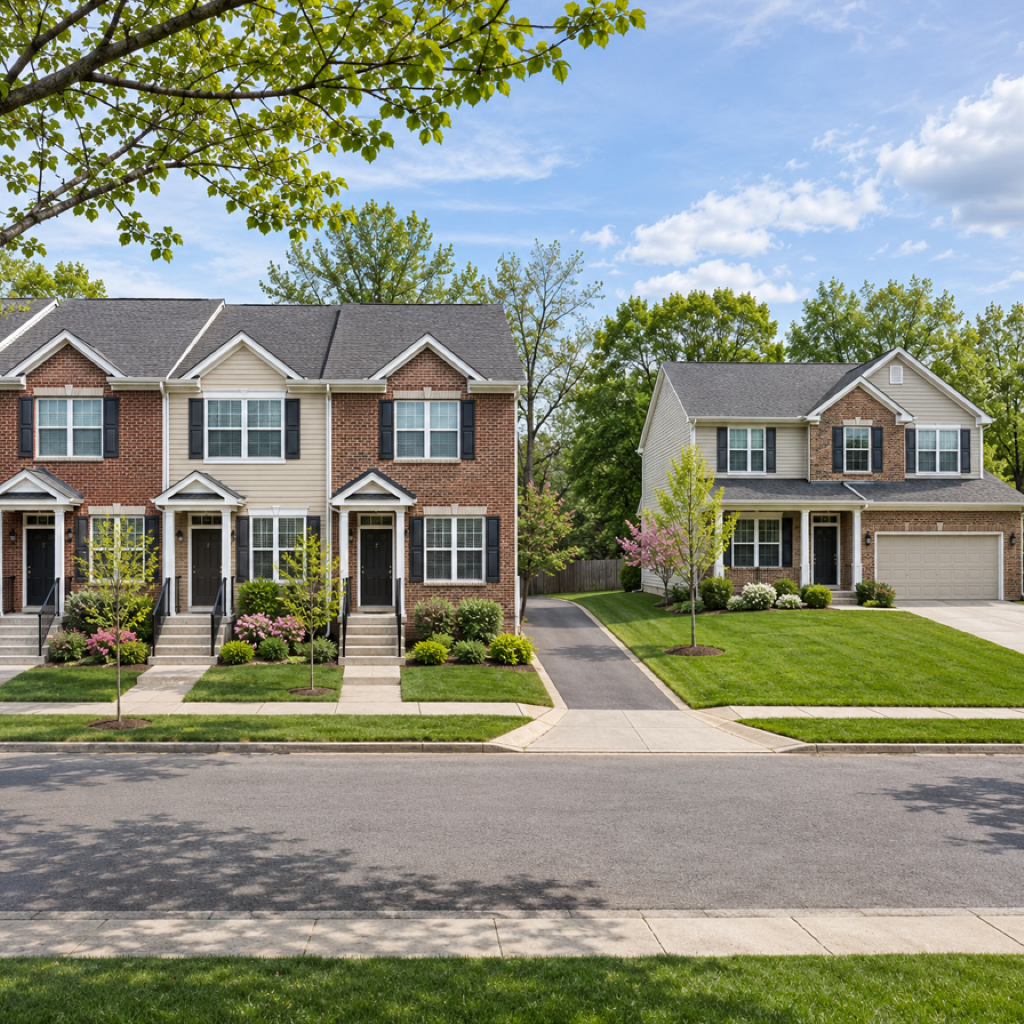
A townhome is a multi-story, attached residence that shares one or two walls with neighboring units. Townhomes generally feature a vertical design (with separate floors), private entrances from the outside, and clear demarcation between units. You may find small, fenced-in yards, patios, or decks attached to townhomes, but large private yards are uncommon. Design and layout vary, but townhomes are distinguished by shared walls and often a uniform exterior appearance within a community.
Typical ownership structure
With a townhome, you typically own both the interior and exterior of your unit, as well as a share of any common areas (like driveways or community amenities). This is different from a condominium, where you usually own only the interior space. Townhomes often have a homeowners association (HOA) that maintains common spaces, landscaping, or community amenities and charges monthly or annual fees for these services.
What Defines a Single Family Home?
Property features overview
A single family home is a detached residential building that stands alone on its own parcel of land. This classic form of housing usually provides more space, both indoors and outdoors, including front and back yards, driveways, and garages. Single family homes allow greater variety in architecture and layout, from one-story ranches to multi-level contemporary designs.
Common ownership details
Ownership of a single family home generally includes the building as well as the entire lot it sits on, which can mean greater control over landscaping, additions, and exterior design. You’re also responsible for all structures on the property (including garages, fences, and outbuildings), unless specific neighborhood rules apply. While some single family developments have an HOA, many do not, so HOA fees and rules may not always be applicable.
How Do Costs Compare?
Initial purchase price
Townhomes often have a lower purchase price per square foot compared to single family homes in the same neighborhood, making them an accessible entry point for many buyers. However, prices vary based on location, size, age, and amenities. Single family homes, offering more land and living space, generally command a higher overall price. Compare total costs—not just asking prices—since layout, lot size, and condition can vary widely.
Maintenance and HOA fees
Townhome owners frequently pay HOA fees. These cover the cost of maintaining common areas (like parking lots or landscaping), and sometimes exterior upkeep such as roofing or painting. In return, you might have fewer out-of-pocket maintenance expenses. Single family homeowners, especially those without an HOA, bear the full responsibility for all repairs, landscaping, and exterior maintenance. While you have more freedom, this can mean more variable and sometimes higher annual costs.
Which Offers More Privacy?
Living space separation
Single family homes typically provide more privacy because they are detached; you don’t share walls with neighbors. This separation can be ideal if you value solitude and wish to avoid shared environments. Townhomes, by design, have at least one shared wall, which can mean that sounds or daily routines occasionally carry between units.
Outdoor areas and noise levels
With a single family home, you usually have access to private outdoor spaces—front and back yards—that are fully separated from neighbors. Townhome outdoor spaces are generally smaller and may feel less private because of the close proximity to neighbors or common areas. Noise levels in townhomes can vary based on building quality and the number of shared walls; however, good construction can reduce the impact.
What About Maintenance Responsibilities?
Townhome maintenance norms
Maintenance within a townhome community is often a shared responsibility. Most HOAs handle exterior maintenance, landscaping, and upkeep of common spaces, while you typically handle interior repairs. This arrangement can simplify homeownership if you prefer not to handle exterior work or yard care, but it also means following HOA maintenance schedules and standards.
Single family upkeep considerations
Owning a single family home means you are responsible for both inside and outside maintenance tasks. This includes everything from lawn care and exterior painting to roof repairs and driveway resurfacing. While this can offer more control and opportunities for personalization, it also requires more involvement and can bring higher, less predictable costs.
How Do Location and Community Differ?
Common townhome locations
Townhomes are often found in urban or suburban developments where space is at a premium. These communities are designed for higher density, maximizing the number of homes in a given area. As a result, you’ll commonly find townhomes situated closer to city centers, transit lines, shopping districts, and other amenities.
Single family home neighborhoods
Single family homes typically populate residential neighborhoods that offer larger lots, more mature landscaping, and less density. These areas may be farther from the city center but can offer quieter surroundings, wider streets, and a stronger sense of individual property boundaries. Schools, parks, and community amenities are often nearby, although walkability can vary.
Which Is Better for Resale?
Market demand trends
Both townhomes and single family homes can be attractive to buyers, but market trends vary by region. Single family homes have long been associated with strong resale demand, largely due to their size, land ownership, and privacy. Townhomes are increasingly popular, especially in markets where affordability and low maintenance are priorities. Trends can shift, so resale prospects depend on supply, demand, and local economic conditions.
Resale flexibility comparison
Single family homes may offer more flexibility for future resale. With more control over property improvements, landscaping, and customization, you can tailor your home more easily to what buyers want. Townhomes, while also resalable, may be subject to HOA restrictions and uniformity that limit modification or appeal to certain buyers. However, a well-maintained townhome in a desirable community can also sell well.